The tiny human has made his way into the world. We’ve passed the six week mark and he and I are doing really well. Don’t ask about sleep or routines because those are so early 2024.
The last time around, the six week checks brought huge anxiety. It was like going for a driving test when I’d only had a few lessons, and really not knowing how to parallel park but pretending I did. This time around I’m glad to say that I had a little more confidence behind the wheel, and that helped immensely.
Spending six weeks mostly sitting in an arm chair in a dimly lit room means I have spent way more time on my phone than I should have. I had very low expectations of my own ability to produce anything but breast milk (and even that was linked to very low expectations after last time), but I have had a few creative ideas which are fermenting and bubbling at the moment. Fingers crossed they turn into something tasty rather than tart.
I turned 40! And for the rest of 2024, buyers of my books on the site can take R40 off their total order. You read it here first, folks! Buy some books, here.
Reading Goals 2024
I have been reading and listening to a few things whilst sitting in that armchair. Many of them I haven’t been able to finish because my attention is torn away by the physical and emotional demands of early motherhood. But I have finished a few things.
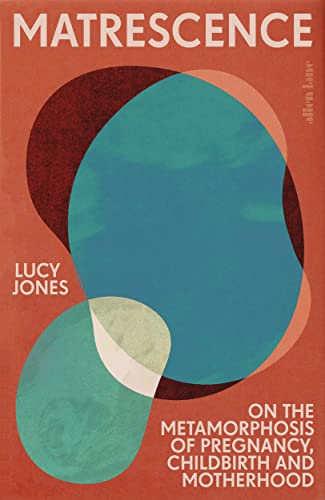
Matrescence by Lucy Jones is an absolutely wild and fantastic exploration of the changes that happen when you become a mother. It should absolutely be compulsory reading for every human being out there, especially when reproductive rights and choices are under threat the way that they are. Jones takes a look at matrescence from a personal and political perspective, exploring her own experience but also the ubiquitous experience of the institution of motherhood. It was thrilling (and disheartening) to see that globally, motherhood as an institution is harmful, and we need to change things. There are so many wonderful sections of the book and an exploration of biology and nature and wildness, which I loved. Please read it.
Side note: ABORTION RIGHTS NOW!!! Becoming a mother is not a nine month process that ends with the baby. It is a lifelong physiological, emotional, and metaphysical change. No person should be asked to become a parent if they do not want to be one (or do not want to be one yet). Click here to make a donation to Marie Stopes, who provide vital abortion and reproductive health services in many places around the world.
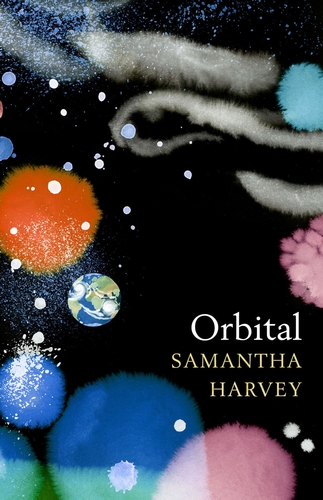
Orbital by Samantha Harvey is a novel that follows the lives of six astronauts in space over the course of one day or sixteen orbits. It is extremely lyrical and beautiful, almost stream of consciousness like writing. Warning for people who are actually wanting a plot in a book – there isn’t really one. But there are passages like this that feel important and made me think about our world and our place in it.
“We send out the Voyager probes into interstellar space in a big-hearted fanciful spasm of hope. Two capsules from earth containing images and songs just waiting to be found in — who knows — tens of hundreds of thousands of years if all goes well. Meanwhile we begin to listen. We scan the reaches for radio waves. Nothing answers. We keep on scanning for decades and decades. Nothing answers. We make wishful and fearful projections through books, films and the like about how it might look, this alien life, when it finally makes contact. But it doesn’t make contact and we suspect in truth that it never will. It’s not even out there, we think. Why bother waiting when there’s nothing there? And now maybe humankind is in the late smash-it-all-up teenage stage of self-harm and nihilism, because we didn’t ask to be alive, we didn’t ask to inherit an earth to look after, and we didn’t ask to be so completely unjustly darkly alone.
Maybe one day we’ll look in the mirror and be happy with the fair-to-middling upright ape that eyes us back, and we’ll gather our breath and think: Oh, we’re alone, so be it. Maybe that day is coming soon. Maybe the whole nature of things is one of precariousness, of wobbling on a pinhead of being, of decentring ourselves inch by inch as we do in life, as we come to understand that the staggering extent of our own non-extent is a tumultuous and wave-tossed offering of peace.
Until then what can we do in our abandoned solitude but gaze at ourselves? Examine ourselves in endless bouts of fascinated distraction, fall in love and in hate with ourselves, make a theatre, myth and cult of ourselves. Because what else is there? To become superb in our technology, knowledge and intellect, to itch with a desire for fulfilment that we can’t quite scratch; to look to the void (which still isn’t answering) and build spaceships anyway, and make countless circlings of our lonely planet, and little excursions to our lonely moon and think thoughts like these in weightless bafflement and routine awe. To turn back to the earth, which gleams like a spotlit mirror in a pitch-dark room, and speak into the fuzz of our radios to the only life that appears to be there. Hello? Konnichiwa, ciao, zdraste, bonjour, do you read me, hello?”
I mean, how’s that for heavenly stream of consciousness writing?
Listening
I’ve been listening to Jonathan Haidt’s The Anxious Generation and I’m still trying to finish listening to Richard Powers’ The Overstory. Both have been fantastic so far. The Anxious Generation looks at declining mental health in young people and links it to the decline of a play-based childhood and the rise of social media. It’s pretty convincing, and suggests that we should not give children smart phones until their adolescence, and they should not be on social media until sixteen at the earliest. As someone who is eternally grateful to not have had social media at high school or until late university, and who formed lifelong friendships because we spent so much time together doing things rather than chatting to each other on our phones, his argument makes complete sense to me. I look forward to finishing it. You can access more information from and about the book here.
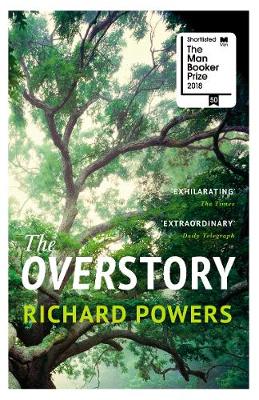
The Overstory is a fiction that centers the natural world, in particular trees, and shows how they shape the lives of several characters. At first we meet the characters individually, and later as they interact and come together around trees. The audiobook is beautifully read. I’m listening to both of these FOR FREE using Libby. Honestly, I wish I could be Libby’s brand ambassador.
Like the dutiful mother doing the third shift of the mental labour of parenthood (on top of their jobs (first shift) and their actual parenting and household chores (second shift) I’ve been listening to Emily Oster’s podcast, Raising Parents. I found the first two episodes really interesting and I’m looking forward to listening to the rest. I’m also still listening to How to Write a Book.
Online readings
Still loving my friend Hannah’s substack, particularly these two posts: I can either have a clean house or a soul (yes to saying a big F-you to the patriarchal delineation of household chores and choosing more for ourselves as a radical political act), and The AI disaster: It’s not what you think (holy shit, we’re fucking up the planet in new ways every day).
I also follow George Saunders’ substack, Story Club, which explores reading and writing stories. It’s a phenomenal resource.
Watching
I finished Emily in Paris. Yes, all of it. Fun fun fun. I, like everyone in cinema, love Paris, so enjoyed just looking at the city and trying to see places I’d been. By the end I loved Emily and I’m definitely team Marcello.
I also finished two cute series – Nobody Wants This and Heartstopper. I’m sure everyone’s heard about hot rabbi by now, but I particularly loved the sibling dynamic in this show. One of the main reasons that I decided to have a second child was so that they’d have a sibling to bitch to about how insane I and my husband are. So that was great for me. Heartstopper is just a lovely treat – the young LGBTQIA+ content that I wish I’d had growing up.
I loved the film Good Grief, how it tackles missing someone you’re furious with, and the love between friends. Highly recommend. I also watched Marriage Story, which was recommended on the How To Write a Book podcast because of the quality of its dialogue. I found the plot quite slow, but agree that the dialogue was phenomenal for what the characters did and didn’t say and what it revealed about them. The intro to the movie is wonderful (SPOILER ALERT AHEAD – if you haven’t watched it, skip straight to the quote). It begins with a couple writing each other a letter detailing the things they love about each other. Then we jump to the divorce mediation room where they’re trying to negotiate the end to their marriage. By starting with what they love, I found that I was rooting so hard for them to make it work (at least initially), because they did love so much about the other person. But as the plot unfolds, we learn that they could just as easily have made a list of all the things they didn’t love, and that is, in the end, the cause of their marriage’s demise. There are also a host of fantastic secondary characters, some delightful, some rotten, who all have great lines to deliver. I mean, how is this for a speech (delivered by the character Nora Fanshaw, played by Laura Dern):
“People don’t accept mothers who drink too much wine and yell at their child and call him an asshole. I get it. I do it too. We can accept an imperfect dad. Let’s face it, the idea of a good father was only invented like 30 years ago. Before that, fathers were expected to be silent and absent and unreliable and selfish, and can all say we want them to be different. But on some basic level, we accept them. We love them for their fallibilities, but people absolutely don’t accept those same failings in mothers. We don’t accept it structurally and we don’t accept it spiritually. Because the basis of our Judeo-Christian whatever is Mary, Mother of Jesus, and she’s perfect. She’s a virgin who gives birth, unwaveringly supports her child and holds his dead body when he’s gone. And the dad isn’t there. He didn’t even do the fucking. God is in heaven. God is the father and God didn’t show up. So, you have to be perfect, and Charlie can be a fuck up and it doesn’t matter. You will always be held to a different, higher standard. And it’s fucked up, but that’s the way it is.”
‘God is the father and God didn’t show up.’ Merciless.
But is she writing?
She is. Slowly. In spurts. With cold coffee nearby. With a baby nuzzled into her chest. With my maternity clothes still on because my body is still somewhere between my body and a vessel at the moment. My short story collection is almost 65000 words now, and I’m submitting to agents (eek!) and hoping for the best. Hold your fingers tightly for me.

 Jen Thorpe
Thanks for the shout out. Really looking forward to reading matrescence. Need to find it. Still don’t have a kindle
Dr Hannah Botsis https://hannahbotsis.substack.com/ c. +27 71 353 3734
“There is no science without fancy and no art without fact.” – Vladimir Nabokov
LikeLike
A friend got her hard copy from Takealot.
LikeLike